Loading trail…

Free — you'll pick up right here.
Watch this trail
Sign up to watch it — saving subscribes you to gate, closure and report changes.
Georgia
0.6 mi
Distance
81 ft
Gain
We won't guess. Here is exactly what we do and don't know.
What we do know
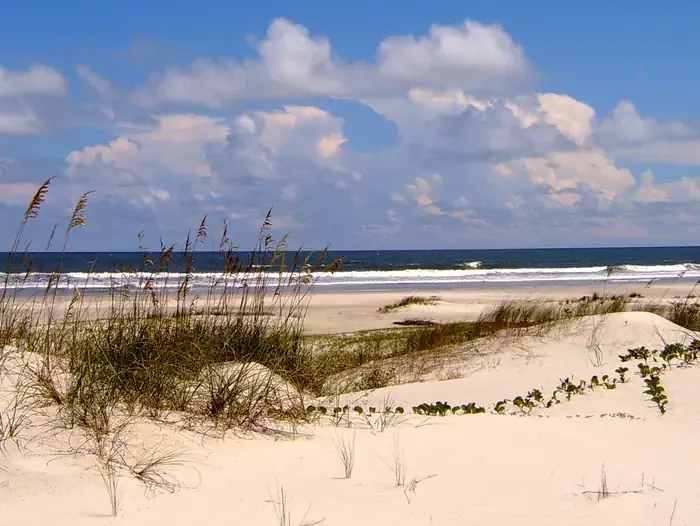
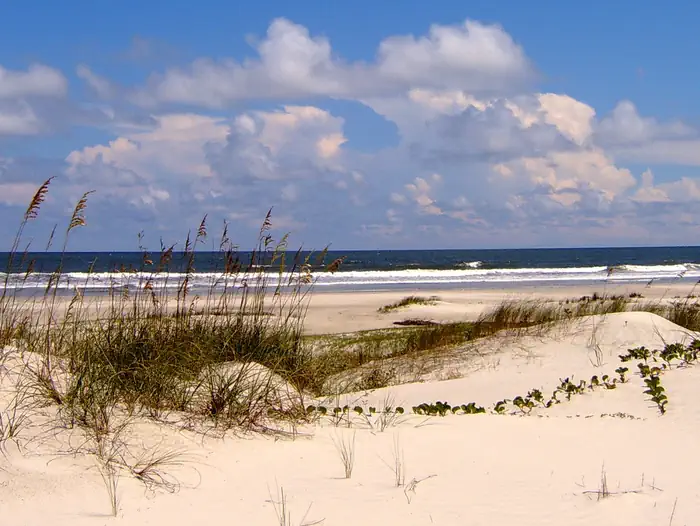
Inside Cumberland Island National Seashore
National Park unit boundary is mapped — agency alerts for it feed this page automatically.
Boundary data
What's missing
No access route mapped
We don't yet know which road reaches this trailhead, so we can't tell you if it's gated.
Nobody's filed a report here yet — be the first.
Why you'll love it
River Trail Stop 8
AI-suggested draft · review before you go
No permit or access details on file for this trail — check with the local land manager before you go.
Stop #8: Smilax (<i>Smilax sp.</i>) Look above the shrubs to find this vine. You can also see the smilax growing on the west side of the trail on top of Red Bay and up from the ground. It may be hard to identify in the winter months, as some species are deciduous. Smilax is a genus that encompasses many species of woody vines. The common name of these vines, such as catbrier, greenbrier, and deer thorns, all indicate the thorny nature of the vine. The spikes are not actually thorns but are termed prickles. Prickles are projections of the plant’s skin, while thorns are modified branches. These prickles help protect the plant from predation. Smilax grows well in a variety of habitats, such as dunes or under the canopy of the Maritime forest. Young new growth and tendrils from the vine were nibbled as a fresh green. Smilax grows a large tuber that allows the plant to sprout back quickly after a fire or other disturbance. These tubers were gathered, soaked, and mashed to separate the starches, which were used to make bread.
River Trail Stop 7
~0 min drive
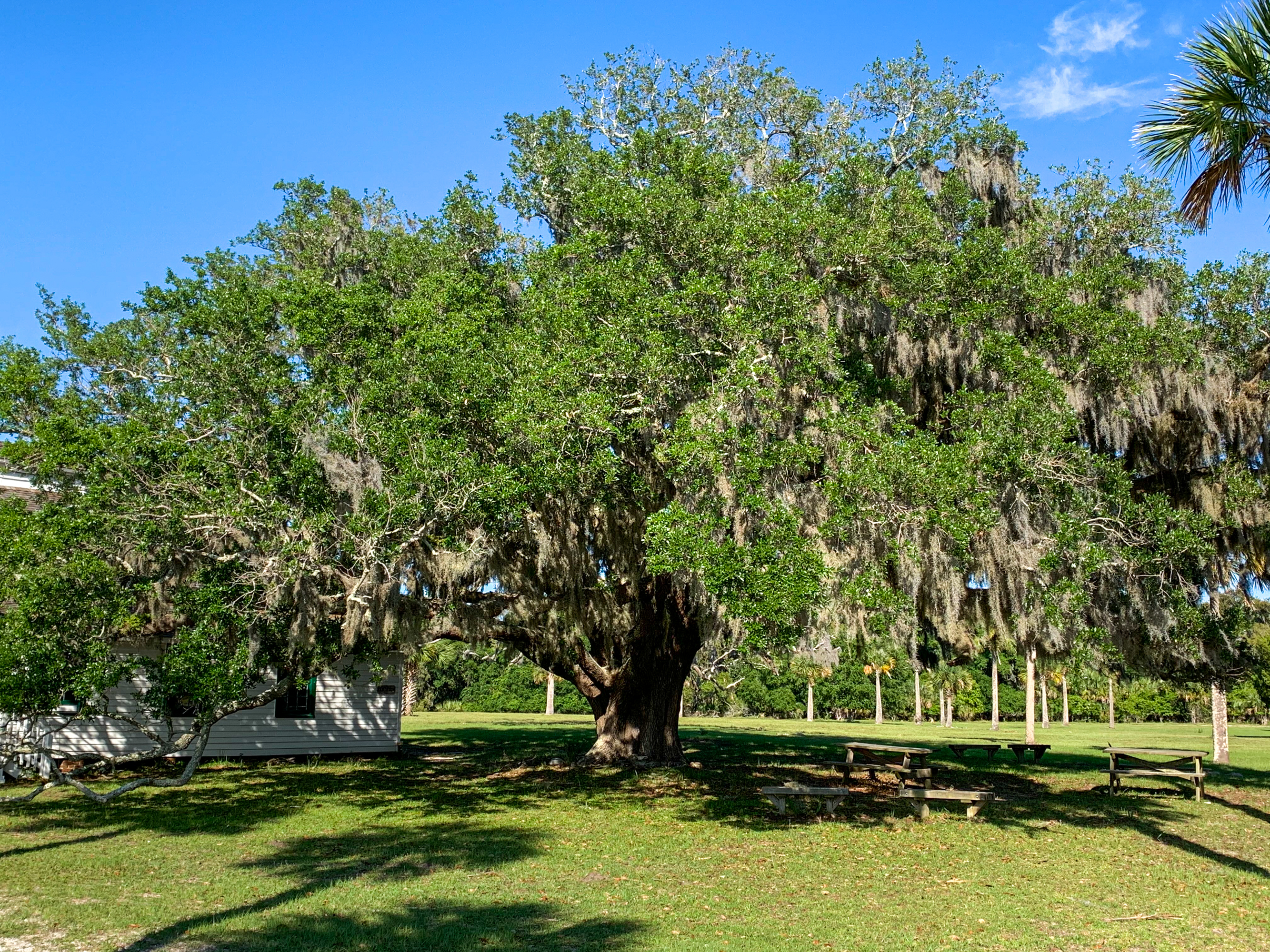
Stop #7: Live Oak (<i>Quercus virginiana</i>) The live oak trunk is to the left of post number 7. The live oak is the dominant tree in the maritime forest. Its dark green leaves are present throughout winter until the new leaves appear in the spring. The outstretched branches…
River Trail Stop 9
~0 min drive
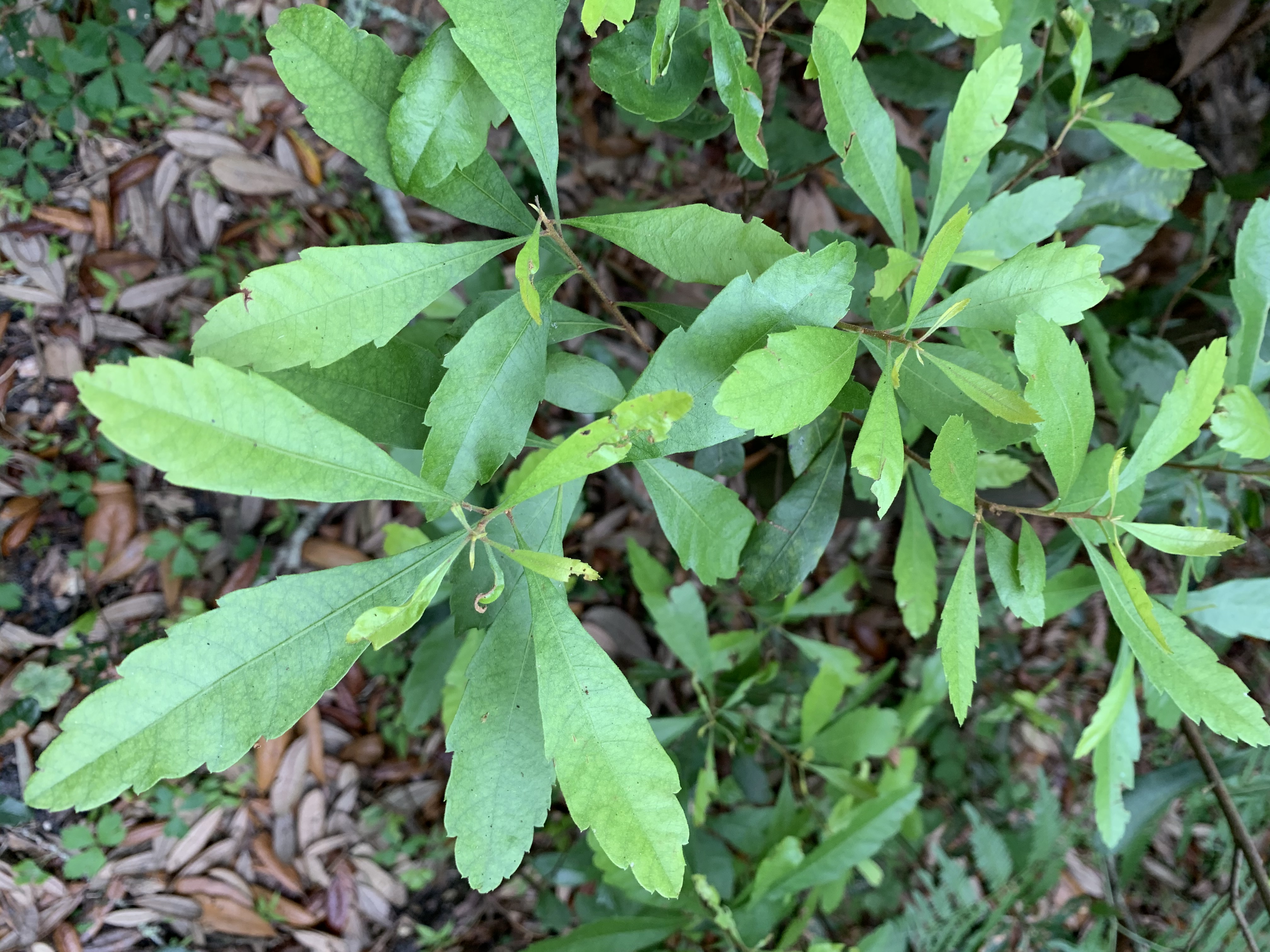
Stop #9: Wax myrtle (<i>Myrica cerifera</i>) Wax Myrtle is the small shrubby plant surrounding post number 9. Its leaves are light to dark green and are skinny, elongated leaves, with slight toothing near the edge. This evergreen shrub is found in the dunes as well as the fore…
River Trail Stop 6
~0 min drive
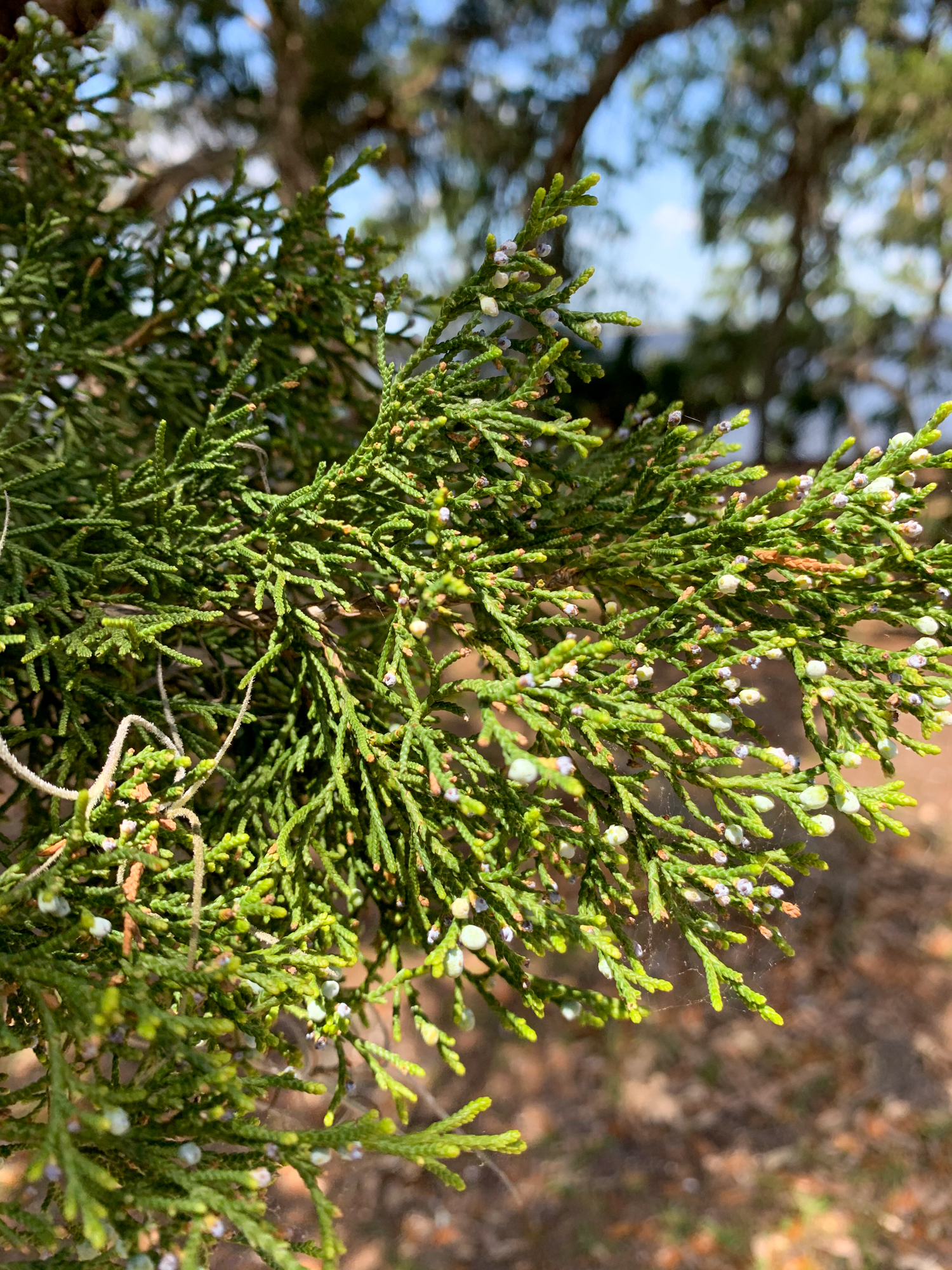
Stop #6: Red cedar (<i>Juniperus virginiana</i>) When facing post number 6, the red cedar is the large tree with flakey bark to the right of the post. The eastern red cedar is actually in the juniper family. Cedar trees, such as the one to the left, are an aromatic evergreen.…
River Trail Stop 3
~1 min drive
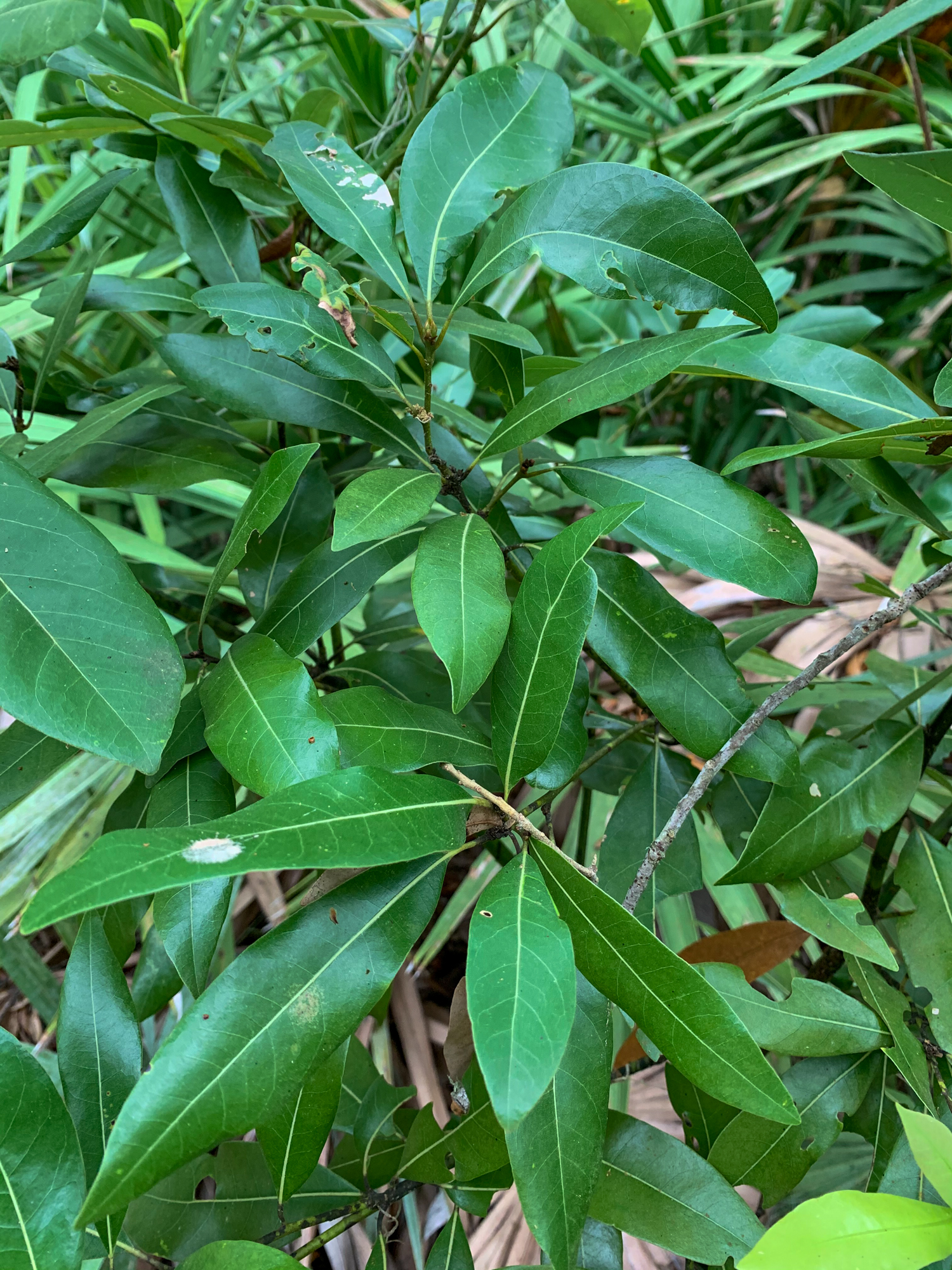
Stop #3: Red bay (<i>Persea borbonia</i>) When facing post number three, the red bay can be found just to the right of the post. It may have brown leaves and look dead. Smaller, younger red bay trees can also be seen further to the left and right of the post. They have large d…
River Trail Stop 2
~1 min drive
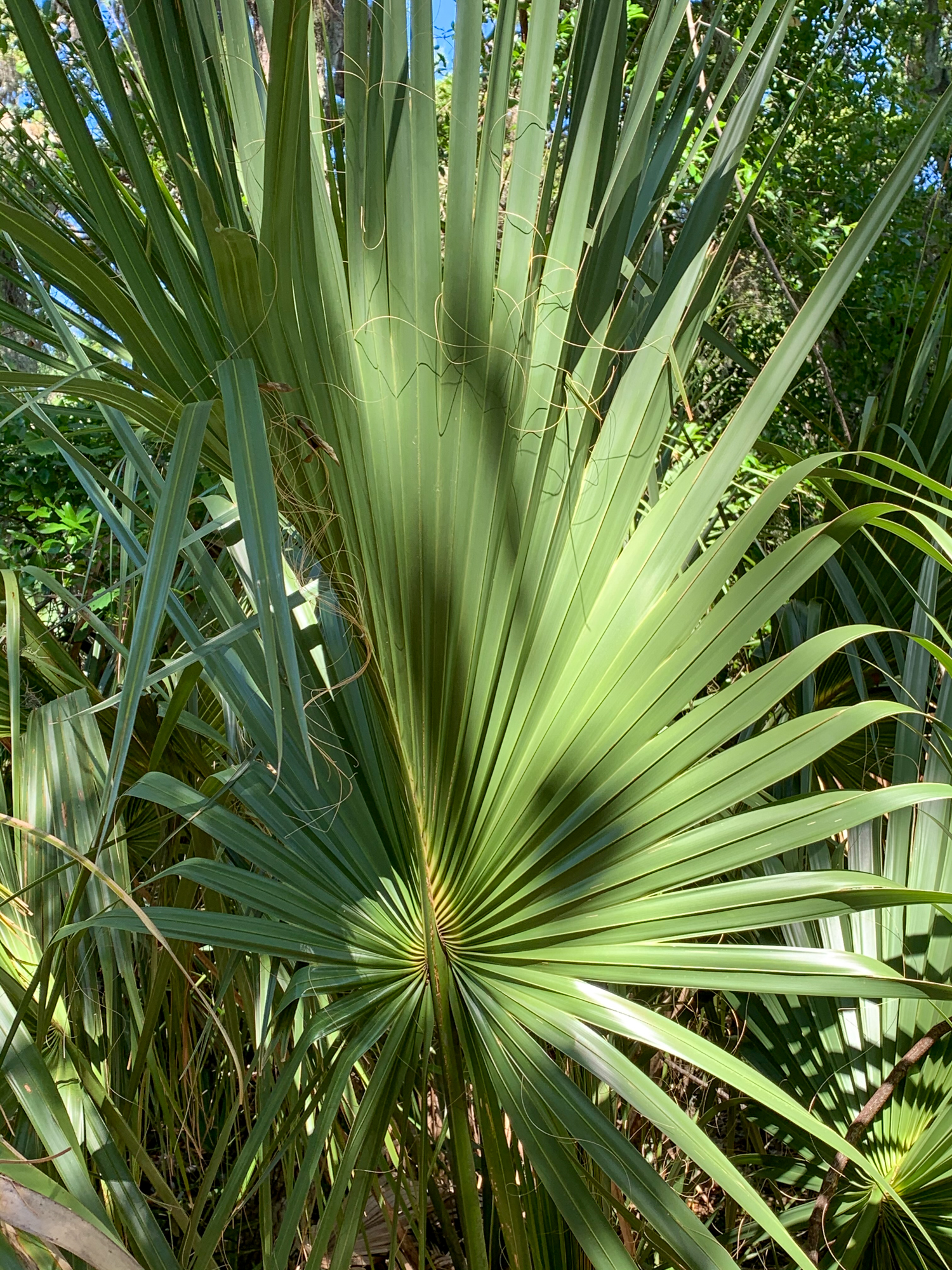
Stop #2: Cabbage palm (<i>Sabal palmetto</i>) Cabbage palms are native to our area and provided many uses to native peoples. When facing post number two, a cabbage palm grows directly behind the post, and another to the right of the post. They grow vertically into the typical…
River Trail Stop 1
~1 min drive
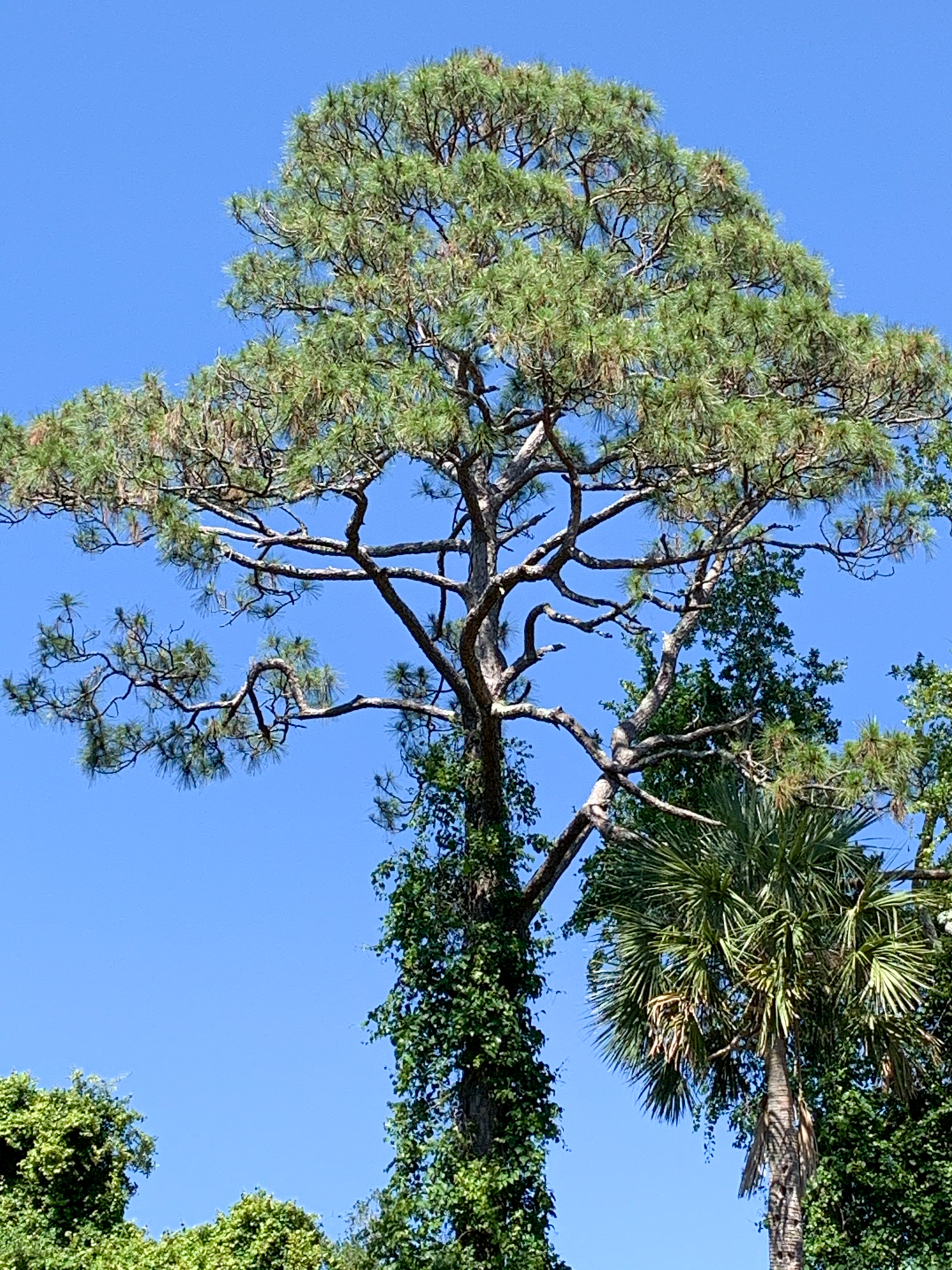
Stop #1: Pine (<i>Pinus sp</i>) Yellow pine is a generic term for several species of pine trees that are found in the Southeastern United States. When facing post number one, look east and slightly south. The Pine tree towers into the canopy above Red Bay and shrubs. Vines cli…
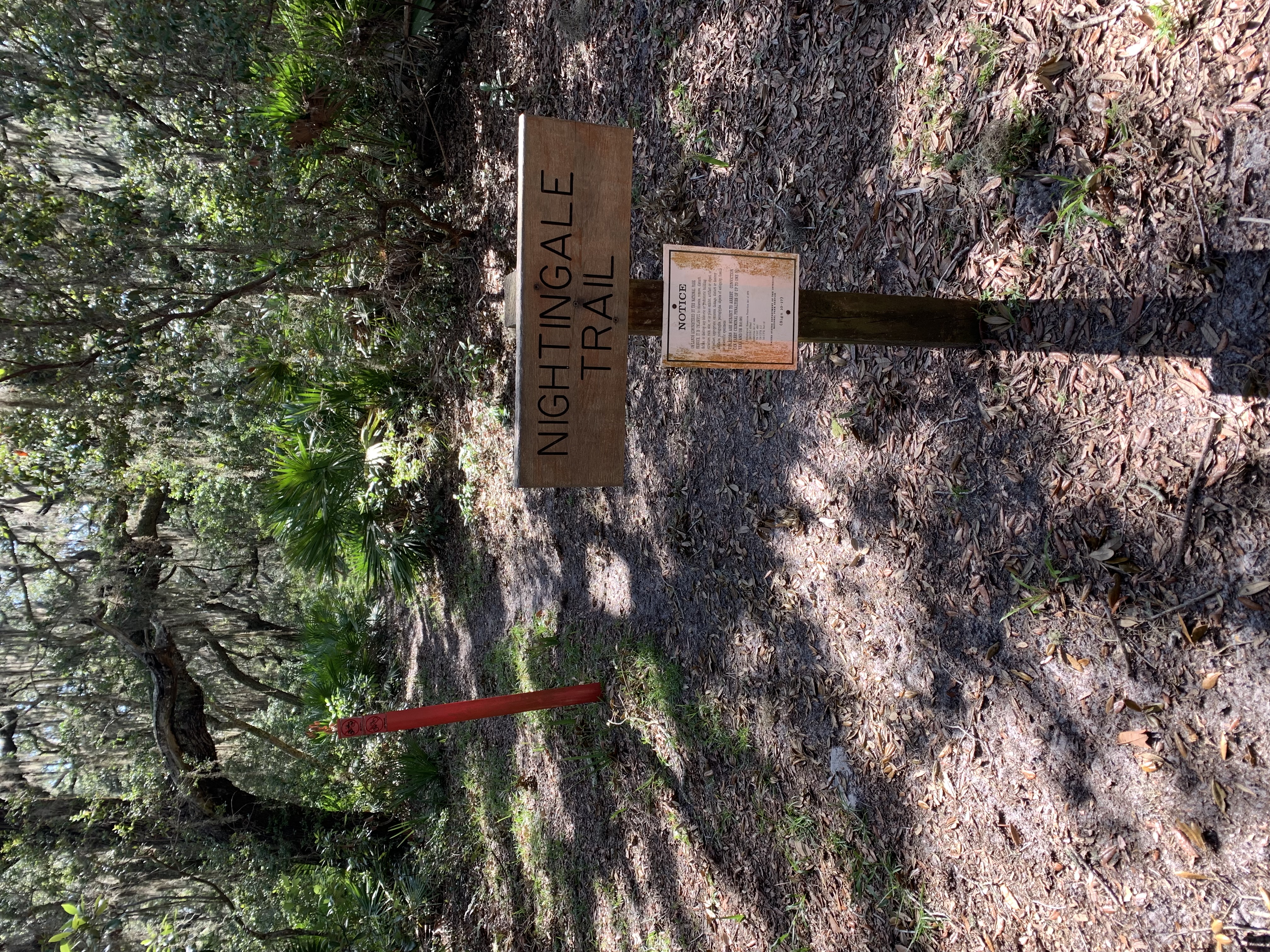
Nightingale Trail - Trailhead North
~1 min drive
You have reached the last stop on the tour. Walking the main road to the left will take you to the Dungeness dock access road, approximately 0.5 miles. Walking to the right will take you to Sea Camp dock access road at 1 mile.
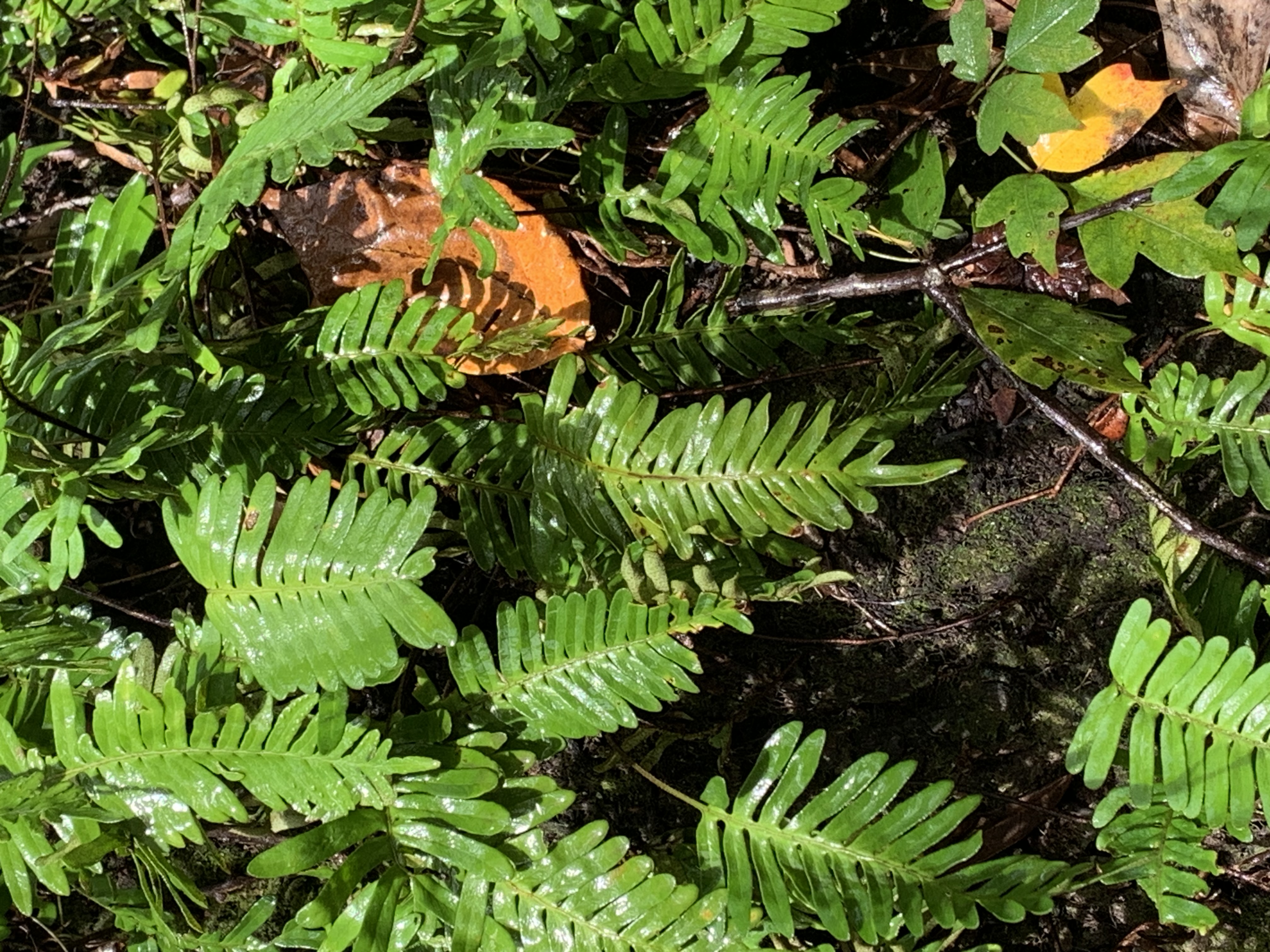
Nightingale Trail - Stop 7 Resurrection Fern
~1 min drive
<b>Resurrection Fern</b> “Polypodium polypodioides”<br /> <br /> This epiphyte (air plant) is growing at eye level on the curved tree trunk to the right of the marker. These small ferns have adapted well to living on the spreading branches of Live oaks. They draw their nutrien…
Dungeness Crossing
~2 min drive
Easy 0.40-mile out-and-back coastal Georgia nature walk.
Egans Creek Greenway Trail
~14 min drive
Scenic 4-mile out-and-back creek trail through natural Florida greenway.